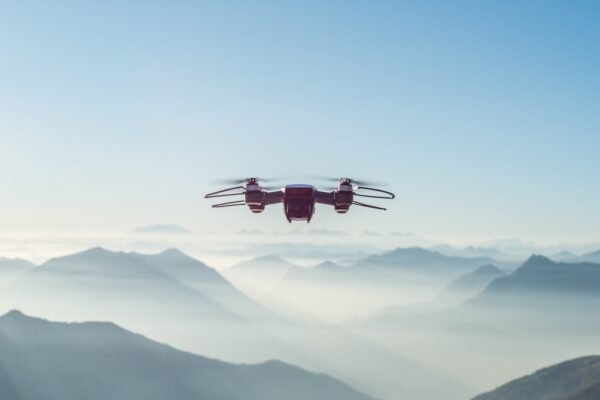
A single drone pilot controlling six autonomous aircraft simultaneously sounds like something from a science fiction script. As of May 2026, it’s FAA-approved reality. Sunflower Labs, the company behind the Beehive autonomous security drone system, has received a regulatory waiver from the Federal Aviation Administration allowing one certified remote pilot to operate up to six drones at once — a landmark authorisation that could fundamentally change how organisations deploy aerial security across large sites.
What Sunflower Labs Has Built
The Beehive system is Sunflower Labs’ flagship product: a dock-based, fully autonomous drone platform designed to patrol properties continuously without requiring a dedicated pilot on standby for each aircraft. The drones launch, navigate, survey, and return to their charging docks automatically, with the human operator acting as a supervisory overseer rather than an active pilot for every movement.
Until now, FAA Part 107 rules required a single remote pilot certificate holder to be responsible for one drone at a time. Scaling an autonomous security deployment meant scaling headcount proportionally — a significant cost and operational barrier for large campuses, industrial sites, and commercial properties. The new 1:6 waiver breaks that constraint entirely.
With each Beehive drone capable of flying up to eight hours a day across multiple missions, a single licensed operator overseeing six aircraft can effectively support 18 or more deployed Beehive units across a property network. That ratio transforms the unit economics of autonomous drone security in a way no software update or hardware refresh could.
AI Insights and Next-Gen Hardware
The FAA waiver wasn’t the only announcement Sunflower Labs made this week. At AUVSI XPONENTIAL 2026 in Detroit — one of the global drone and autonomous systems industry’s largest annual gatherings — the company also previewed its next-generation Beehive hardware and launched a new software layer called AI Insights.
AI Insights adds an intelligence tier to the Beehive platform, allowing the system to analyse patterns in its own surveillance footage over time. Rather than simply recording and alerting on motion events, the upgraded platform can identify behavioural anomalies, distinguish between routine activity and genuine security concerns, and surface actionable intelligence for the operator — reducing alert fatigue while sharpening response quality.
This combination of wider autonomous coverage and smarter onboard analysis positions Beehive as a serious alternative to fixed camera infrastructure for large-scale security applications. Rather than dozens of static cameras covering fixed angles, a fleet of autonomous drones can deliver adaptive, dynamic coverage that repositions in real time based on developing situations.
A Regulatory Milestone With Broad Implications
The significance of the 1:6 waiver extends well beyond Sunflower Labs itself. It represents one of the clearest signals to date that the FAA is willing to move beyond traditional one-pilot-one-aircraft models when operators can demonstrate that autonomous systems are safe enough to justify it.
For the broader drone industry, this matters enormously. Enterprise operators across security, inspection, infrastructure monitoring, and logistics have long argued that the single-operator rule creates an artificial ceiling on scalability. Every commercial application that relies on autonomous flight — from pipeline inspection to port security to warehouse logistics — faces the same bottleneck. A regulatory framework that accommodates supervised autonomy, rather than requiring direct control, is the foundation those industries need to scale properly.
Sunflower Labs’ waiver is specific to its Beehive platform, with approvals tied to its particular flight characteristics, operational procedures, and safety case documentation. But the precedent it sets — and the language the FAA used in granting it — will be closely studied by other autonomous drone developers looking to make similar arguments for their own systems.
The Road Ahead
The drone security market has been growing steadily, driven by rising costs of traditional guard services, advances in computer vision, and improving drone reliability. Commercial properties, utility infrastructure, solar farms, and industrial campuses have all emerged as strong candidates for autonomous aerial security — but deployment has been constrained by both cost and regulatory uncertainty.
With the 1:6 waiver now in hand and next-generation hardware on the horizon, Sunflower Labs is positioned to accelerate into that demand. The company’s Series B funding of $16 million, raised in late 2025, provides the runway to scale production and expand its operator network.
Perhaps most importantly, the Sunflower Labs milestone adds another data point to the FAA’s evolving understanding of what responsible autonomous drone operations look like at scale. As the agency works through its broader regulatory roadmap — including BVLOS frameworks and urban air mobility integration — real-world examples of supervised autonomy operating safely are exactly the kind of evidence base that shapes future rulemaking. One pilot, six drones. It’s a small number that points to a very large future.