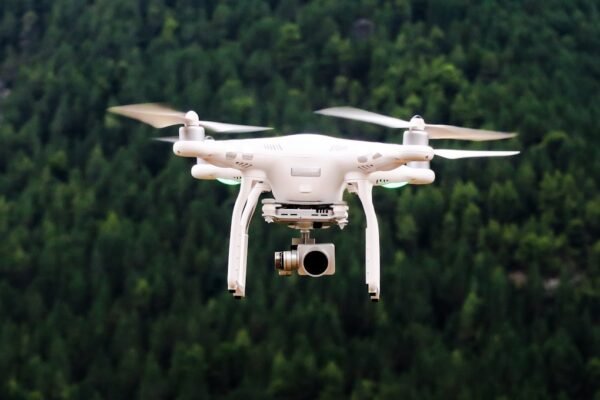
When a donor organ becomes available, every minute counts. The window between procurement and transplantation is brutally short — hearts must be transplanted within four to six hours, lungs within six to eight. For decades, that pressure has been managed the same way: ground vehicles, charter flights, and a lot of urgency. Now, NASA and the United Network for Organ Sharing (UNOS) are asking whether drones can do it better.
The two organisations have signed a formal Space Act Agreement to launch a collaborative research program exploring UAV-based organ transport. The partnership brings together NASA Langley Research Center’s expertise in autonomous flight systems and UNOS’s deep knowledge of the organ procurement and transplantation network — a combination that could fundamentally change how the most time-critical deliveries in medicine are handled.
What the Research Will Actually Do
The first phase of the program is deliberately methodical. Rather than rushing straight to human organ test flights, researchers will focus on understanding the physical environment inside a drone carrying biological cargo. They will develop and deploy instrumentation to measure how temperature, vibration, pressure, and altitude fluctuations affect organs during UAV flight — initially using research materials and animal organs as proxies.
Flight testing will take place at NASA Langley’s City Environment Range Testing for Autonomous Integrated Navigation facility, known as CERTAIN. This infrastructure allows drones to fly beyond visual line of sight (BVLOS) in realistic urban conditions without requiring ground-based spotters at every point along the route — a critical capability if drone organ transport is ever going to operate at scale in real cities.
The data collected will help determine what modifications, if any, are needed to packaging, flight parameters, or aircraft systems to keep sensitive biological material viable throughout a drone journey. It is foundational work, but it is exactly the kind of evidence base that regulators and medical professionals will need before any broader rollout could be approved.
Why This Matters Beyond the Lab
The organ transplant system in the United States faces a persistent logistical challenge. More than 100,000 people are currently on the national transplant waiting list, and time-sensitive transport failures — delayed flights, ground traffic, weather disruptions — contribute to organs being discarded before they can be used. UNOS estimates that thousands of viable organs go unused every year, partly due to logistical breakdowns.
Drones offer a potential solution that conventional aviation cannot easily replicate. They can take off immediately, fly direct point-to-point routes, avoid road congestion entirely, and in theory operate around the clock without the scheduling constraints of commercial aviation. For short to medium distance transport between hospitals and procurement sites, the use case is genuinely compelling.
There is also a broader signal here. When NASA — an agency not typically associated with medical logistics — decides that UAV organ transport is worth a formal research agreement, it reflects how far drone technology has matured as a serious operational tool. This is not a proof-of-concept stunt. It is structured scientific inquiry with a clear real-world application.
The Road to Operational Reality
If early results are promising, the partnership is designed to expand. Subsequent phases could include more complex flight scenarios, longer distances, and eventually trials with actual transplantable organs under controlled conditions. Regulatory approval from the FAA would be required before any operational deployment, and that process will take time — particularly for BVLOS flights over populated areas, which remain one of the more complex areas of drone regulation in the US.
But the trajectory is clear. Medical drone delivery has been building momentum for years, with programs like MissionGO already completing real organ transport flights and demonstrating viability in controlled settings. The NASA-UNOS collaboration adds institutional credibility and rigorous research infrastructure to that growing body of evidence.
For the drone industry, this partnership represents exactly the kind of high-value, unambiguously positive application that demonstrates what UAV technology is capable of when pointed at the right problems. Saving lives through faster, smarter logistics is a powerful argument — and one that this research program is now working to put on solid scientific footing.