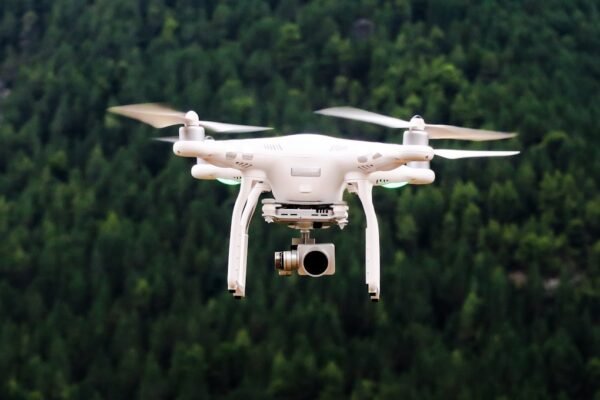
Joby Aviation has achieved a pivotal milestone in the urban air mobility sector, securing the Federal Aviation Administration (FAA) Type Certificate for its S4 all-electric vertical take-off and landing (eVTOL) aircraft. The announcement, made on April 18, 2026, marks the first time a full-size eVTOL aircraft has received type certification in the United States.
The S4 is designed to carry four passengers plus a pilot at speeds up to 200 mph, with a range of approximately 100 miles on a single charge. The aircraft features six tilting propellers that allow it to take off and land vertically like a helicopter while cruising with the efficiency of a fixed-wing plane.
A Decade in the Making
Joby’s path to certification has been one of the most closely watched journeys in aviation history. The Santa Cruz, California–based company first began developing the S4 in 2009 and has since accumulated more than 33,000 flight miles across its prototype fleet. The type certification process involved extensive testing of the aircraft’s propulsion, avionics, structural integrity, and fail-safe systems.
“This certification represents a watershed moment for aviation,” said JoeBen Bevirt, Joby’s founder and CEO. “We’ve demonstrated that electric flight is not only possible but can meet the same rigorous safety standards as conventional aircraft.”
The FAA confirmed that the certification covers commercial passenger operations under Part 135, which governs air taxi and commuter services. Joby is expected to begin commercial operations in select U.S. cities by late 2026, pending operating certificate approval.
Implications for the Broader Drone and UAV Industry
The certification has significant implications beyond air taxis. Industry analysts note that the regulatory pathway established by Joby’s certification creates a framework that will benefit the entire unmanned aerial systems ecosystem — from cargo drones to autonomous aerial inspection platforms.
For commercial drone operators, including aerial service providers who already conduct complex operations in challenging environments, the evolving regulatory landscape signals new opportunities. As airspace integration standards mature, operators with existing expertise in precision flying and regulatory compliance will be well-positioned to expand into emerging sectors.
What’s Next
Joby has announced plans to establish its first commercial vertiport in New York City, with additional locations planned in Los Angeles, Miami, and San Francisco. The company has also secured partnerships with Delta Air Lines and Uber, and is actively pursuing certification with the European Union Aviation Safety Agency (EASA).
With competitors including Archer Aviation, Lilium, and Volocopter also progressing through certification pathways in various jurisdictions, the race to commercialise electric air taxis is entering its most competitive phase yet. Analysts at Morgan Stanley project the global urban air mobility market could be worth $1.5 trillion by 2040.