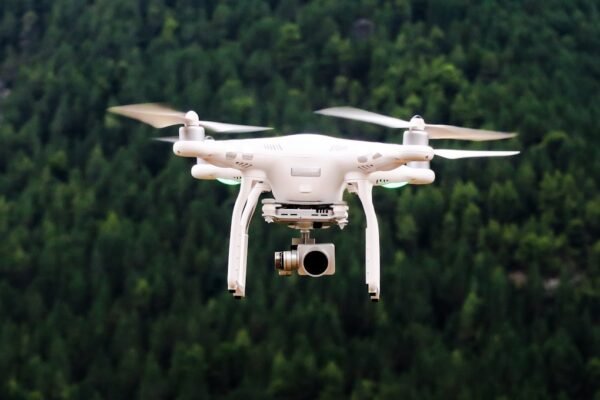
DJI has never been shy about pushing the boundaries of what consumer drones can do, but the Avata 360 represents something genuinely new. Released globally in March 2026 and now fully available in the United States, it is the company’s first drone to combine a native 360-degree camera system with full FPV flight capability — and the results are as impressive as they sound.
At its core, the Avata 360 is built around two 1-inch-equivalent sensors, each featuring 2.4 micrometre pixels, working together to capture complete spherical footage at 8K resolution and 60 frames per second in HDR. For anyone who has tried to stitch 360 footage together in post, the appeal of having that capability baked natively into a high-performance FPV platform is immediately obvious.
8K Spherical and Traditional FPV in One Aircraft
What makes the Avata 360 particularly versatile is its Single Lens mode. Pilots can switch the camera configuration to a standard forward-facing 4K at 60fps FPV shooting mode — essentially the same experience as the well-regarded Avata 2, which already has a strong following in the FPV community. That means buyers are not trading one capability for another; they are getting both in the same aircraft.
Transmission is handled by DJI’s O4+ system, which is the same connectivity backbone used across the company’s current flagship lineup. Range, latency, and signal reliability are all in line with what DJI pilots have come to expect from that standard.
Pricing and Availability
The Avata 360 launched globally at USD 719 — a figure that positions it aggressively against rivals in the spherical FPV space. Its closest competitor, the Antigravity A1, retails at over USD 1,200 even after discounting. That price gap is significant, and it reflects DJI’s ability to leverage its manufacturing scale in a way that smaller competitors simply cannot match.
US buyers experienced a brief delay relative to the global launch, with availability confirmed from 30 March 2026. Units are now shipping domestically through third-party retailers and select online channels.
What It Means for Aerial Content Creation
The practical implications for aerial cinematographers and content creators are substantial. Until now, achieving true immersive 360-degree aerial footage typically required either a multi-camera rig mounted to a larger platform, or a compromise on flight agility. The Avata 360 collapses that trade-off into a compact, purpose-built aircraft that can still fly the tight, dynamic lines FPV is known for.
For real estate, events, virtual tours, and emerging VR content formats, having an agile platform that captures broadcast-quality spherical footage out of the box opens up production workflows that previously required significantly more equipment and crew.
A Broader Signal from DJI
The Avata 360 is reportedly the opening move in what sources describe as one of DJI’s most ambitious product rollout years. The company’s ability to bring an 8K spherical FPV drone to market at this price point — even amid ongoing regulatory scrutiny in the US — underscores how far consumer drone technology has progressed since the original Avata launched in 2022.
For the broader drone industry, the Avata 360 is a reminder that consumer hardware innovation is far from plateauing. The convergence of immersive imaging and agile flight in a single affordable platform is exactly the kind of development that expands who can create compelling aerial content — and what those creators can produce.