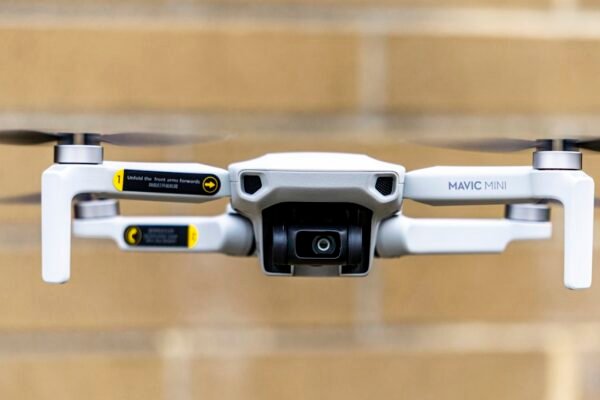
In a move that will come as significant relief to hundreds of thousands of drone operators across the United States, the Federal Communications Commission has extended its software and firmware update waiver for foreign-made unmanned aerial vehicles until at least January 1, 2029. The decision, formalised through Public Notice DA 26-454 on May 8, 2026, walks back a hard deadline that had threatened to leave millions of operational drones unable to receive security patches or functionality updates.
What Changed and Why It Matters
The FCC had previously placed DJI, Autel Robotics, and other foreign-manufactured drone brands on its “Covered List” — a designation that, under the existing framework, would have blocked manufacturers from issuing post-approval software and firmware modifications to already-authorised devices. The original cutoff for drones was set at January 1, 2027, leaving a ticking clock over an enormous installed base of commercial and consumer UAVs operating legally across the country.
The new waiver not only pushes that deadline out by two years to January 2029 but expands the scope of permitted updates. Previously, only Class I changes were covered — relatively minor tweaks that don’t alter a device’s fundamental operating parameters. The extended waiver now also covers Class II permissive changes, meaning manufacturers can issue more substantive software and firmware modifications, provided those updates serve to maintain device functionality, patch security vulnerabilities, or preserve compatibility with evolving operating systems and network environments.
The Cybersecurity Argument That Turned the Tide
The FCC’s rationale for the extension reveals an important evolution in how regulators are thinking about the tension between national security concerns and practical cybersecurity realities. The agency stated explicitly that “special circumstances warrant a deviation from the general rules and the public interest would be better served by extending the waiver.”
Translated into plain terms: blocking security updates on the millions of DJI and Autel drones already in American hands would have created a far worse cybersecurity exposure than the presence of those devices on the Covered List was intended to address. Frozen firmware is vulnerable firmware, and devices that cannot receive patches become a liability rather than a managed risk.
This reasoning aligns with what security researchers and industry advocates had been arguing for months. A drone that cannot be updated is a drone that will eventually be running exploitable, unpatched software — a risk that falls squarely on operators, businesses, and the broader airspace ecosystem rather than on the device’s manufacturer.
Scope and Limitations
It is important to understand what the waiver does and does not cover. The extension applies exclusively to devices that had already received FCC authorisation before being added to the Covered List. New devices from listed manufacturers still face the full restrictions of the Covered List framework and cannot be approved for use in the United States under current rules.
For existing operators — commercial surveyors, precision agriculture businesses, infrastructure inspection companies, filmmakers, and recreational flyers — the waiver means their current fleets can continue receiving firmware updates, bug fixes, and feature improvements from manufacturers through at least the end of 2028. That is a meaningful runway for operators to plan transitions, for manufacturers to develop compliant alternatives, and for the regulatory landscape to evolve.
What Operators Should Do Now
While the waiver provides breathing room, it is not a permanent solution. January 2029 will arrive, and operators relying on affected platforms should be actively monitoring the regulatory environment and considering their transition options. The FCC’s own language — “at least” January 1, 2029 — leaves open the possibility of another extension, but betting a commercial operation on that outcome would be premature.
Manufacturers, for their part, have been accelerating development of compliant platforms and are likely to use this extended window to push their product pipelines forward. Operators would be wise to track those developments closely.
Broader Industry Implications
The FCC’s decision reflects a maturing regulatory approach to the foreign-drone question — one that is increasingly grappling with the complexity of a market where the most widely deployed professional-grade hardware comes from manufacturers that simultaneously raise legitimate security questions. The waiver is not an endorsement of those platforms, but an acknowledgment that blunt instrument approaches to technology policy can create as many problems as they solve.
For the drone industry broadly, the extension stabilises a significant portion of the current operational fleet and preserves the commercial relationships, workflows, and skill sets built around those platforms. It buys time — time for regulators to develop more nuanced frameworks, for domestic and allied-nation manufacturers to scale compliant alternatives, and for operators to navigate the transition thoughtfully rather than under duress. In an industry that thrives on technological momentum, that breathing room may prove more valuable than it first appears.